
Papua New Guinea has long been one of the biggest gaps on the mammal watching map, despite being home to some of the most desirable mammals on Earth. In 2025 Carlos Bocos guided what was, as far as we know, the first organized mammal watching tour to Papua New Guinea, and the results were spectacular: 31 mammal species in just 12 nights in the field.
The trip was part of a bigger project to see all the tree kangaroos of the world, and it combined ten nights camping in remote montane forest in the Owen Stanley Range, near the Kokoda Track, with two nights at Kumul Lodge in the Central Highlands.
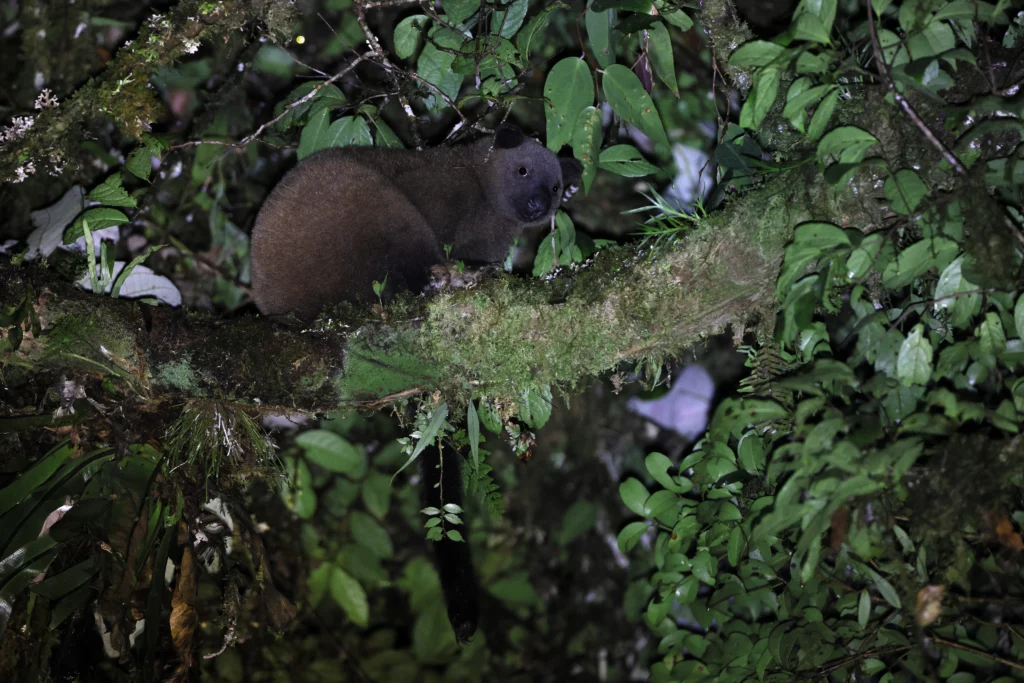
The highlight of the trip. Doria’s Tree Kangaroo is one of the hardest mammals in New Guinea to see. There is no lodge and no easy site: reaching it means a serious investment of money and stamina, with ten nights camping in remote montane forest in the Owen Stanley Range, near the Kokoda Track. It paid off: three different animals gave exceptional views. Few mammal watchers have ever seen this large, shaggy tree kangaroo in the wild, and good photographs of wild animals are hard to come by. On a trip built around seeing all the tree kangaroos of the world, this was the sighting that made the expedition.
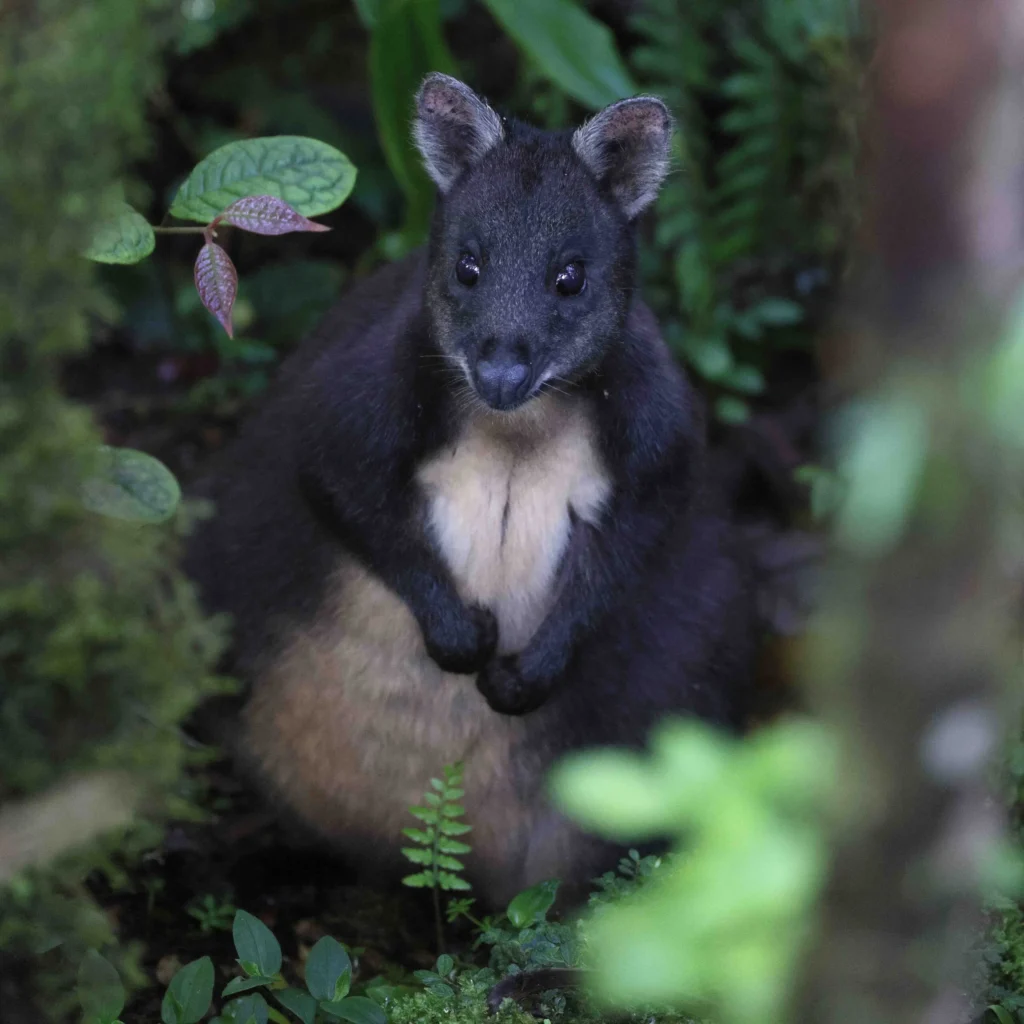
Trip highlights
- Doria’s Tree Kangaroo: the highlight of the trip, and one that demands real effort to see. Three animals gave exceptional sightings after ten nights camping in the Owen Stanley Range (see photo).
- Calaby’s Pademelon: a true mega mammal, seen in daylight at Kumul Lodge, where it is now reliably found.
- Five cuscus species, including five sightings of Ground Cuscus in both grey and brown morphs, and an exceptionally common Mountain Cuscus.
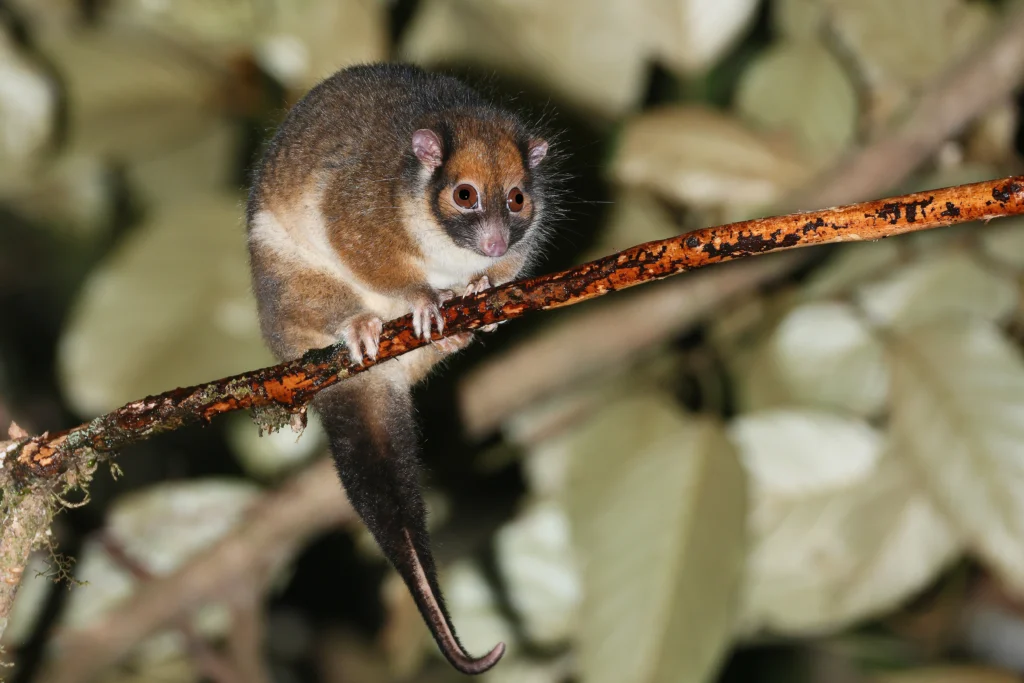
- Seven ringtails and possums: Painted, Plush-coated, Masked, Pygmy and Coppery Ringtails, Feather-tailed Possum and the rarely photographed Eastern Long-fingered Triok.
- Speckled Dasyure and Narrow-striped Marsupial Shrew, two of New Guinea’s least-seen small carnivorous marsupials.
- Great rodents such as Lamia, De Vis’s Woolly Rat and a stunning Mountain Mosaic-tailed Rat above 3,000 m.
- Bats including Moss-forest Blossom Bat, Flores Tube-nosed Bat (a female with a small pup) and Greater Papuan Pipistrelle.
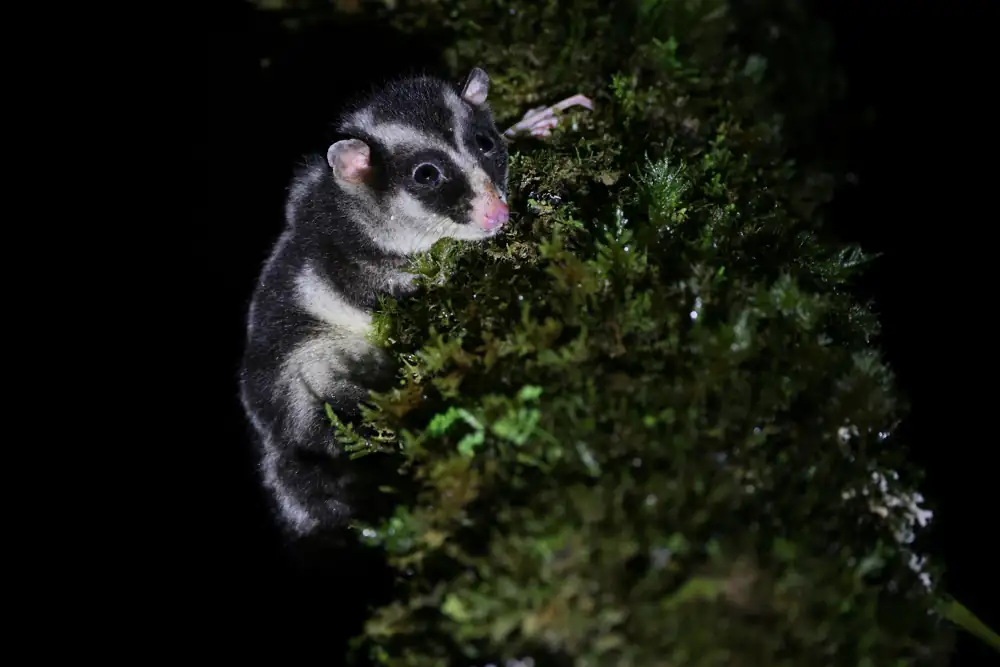
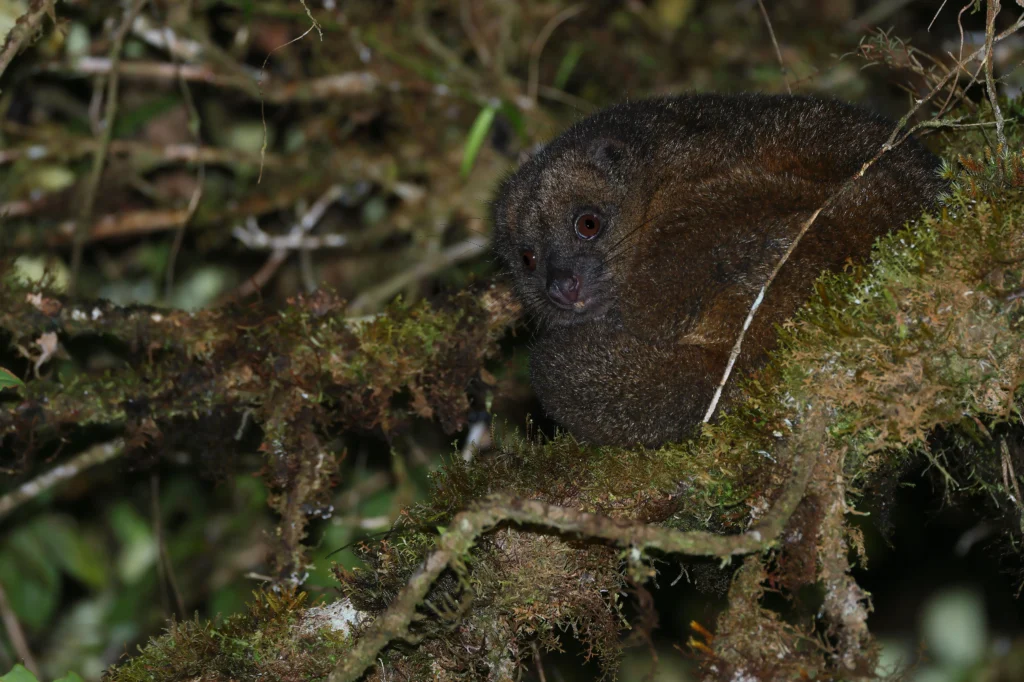
One of the rarest photographs of the trip. Long-fingered trioks are among the least-known marsupials of New Guinea: shy, nocturnal and seldom seen, they use an extraordinarily long fourth finger to pull insect larvae out of dead wood. In 2026 the genus was revised by Flannery, Aplin, Bocos, Koungoulos and Helgen in the Records of the Australian Museum, in the same paper that announced the rediscovery of the Pygmy Long-fingered Possum. The long-fingered trioks were split into two species: the Western Long-fingered Possum (Dactylonax palpator) and the Eastern Long-fingered Triok, also called Eastern Long-fingered Possum (Dactylonax ernstmayri), which occurs in Papua New Guinea. Under this latest taxonomy, the animal we photographed on this tour is the eastern species. At the time of writing, iNaturalist holds just three records of it worldwide, which makes this one of very few photographs of a living Eastern Long-fingered Triok.
Itinerary
- Owen Stanley Range (10 nights camping in different sections of montane forest near the Kokoda Track)
- Kumul Lodge, Central Highlands (2 nights)
Mammal list
Owen Stanley Range
- Doria’s Tree Kangaroo (Dendrolagus dorianus)
- Small Dorcopsis (Dorcopsulum vanheurni)
- Silky Cuscus (Phalanger sericeus)
- Ground Cuscus (Phalanger gymnotis)
- Mountain Cuscus (Phalanger carmelitae)
- Eastern Common Cuscus (Phalanger intercastellanus)
- Painted Ringtail (Pseudochirulus forbesi)
- Plush-coated Ringtail (Pseudochirops corinnae)
- Eastern Long-fingered Triok (Dactylonax ernstmayri)
- Feather-tailed Possum (Distoechurus pennatus)
- Long-tailed Pygmy Possum (Cercartetus caudatus)
- New Guinea Glider (Petaurus papuanus)
- Narrow-striped Marsupial Shrew (Phascolosorex dorsalis)
- New Guinea Jumping Mouse (Lorentzimys nouhuysi)
- De Vis’s Woolly Rat (Mallomys aoraensis)
- Mountain Mosaic-tailed Rat (Paramelomys rubex)
- Eastern Rat (Rattus mordax)
- Moss-forest Rat (Stenomys niobe)
- Black-tailed Giant Rat (Uromys anak)
- Lamia (Chiruromys lamia)
- Paramelomys sp.
- Moluccan Naked-backed Fruit Bat (Dobsonia moluccensis)
- Mountain Tube-nosed Fruit Bat (Nyctimene certans)
- Rhinolophus sp.
- Flores Tube-nosed Bat (Murina florium)
- Moss-forest Blossom Bat (Syconycteris hobbit)
- Greater Papuan Pipistrelle (Pipistrellus collinus)
Kumul Lodge (additional species)
- Calaby’s Pademelon (Thylogale calabyi)
- Masked Ringtail (Pseudochirops larvatus)
- Pygmy Ringtail (Pseudochirops mayeri)
- Coppery Ringtail (Pseudochirops cupreus)
- Speckled Dasyure (Neophascogale lorentzi)
Read the full report
The complete trip report, with detailed species accounts and photos, is available on mammalwatching.com: Papua New Guinea 2025 (PDF).
Join our next Papua New Guinea tour
Building on this trip, we are running two small-group Papua New Guinea mammal tours in May–June 2027, with helicopter access to remote mountain forests. The first group is full and the second group has only two places left. See the full itinerary and book your place.