
In June 2023 Carlos Bocos led a pioneering mammal watching expedition to the Bird’s Head (Vogelkop) Peninsula of West Papua and Waigeo Island. He had lived in West Papua for several years and had spent four years planning the trip with Jon Hall of mammalwatching.com, delayed along the way by COVID. The team found 59 mammal species in just over two weeks. They included both tree kangaroos of the Vogelkop, the Western Long-beaked Echidna and the first photographs ever taken of a living Pygmy Long-fingered Possum, a species previously known only from fossils.
Jon Hall wrote that the trip probably gave him more lifers than any other in 30 years of mammal watching.
A discovery that made world headlines
We found a mammal thought extinct for 6,000 years
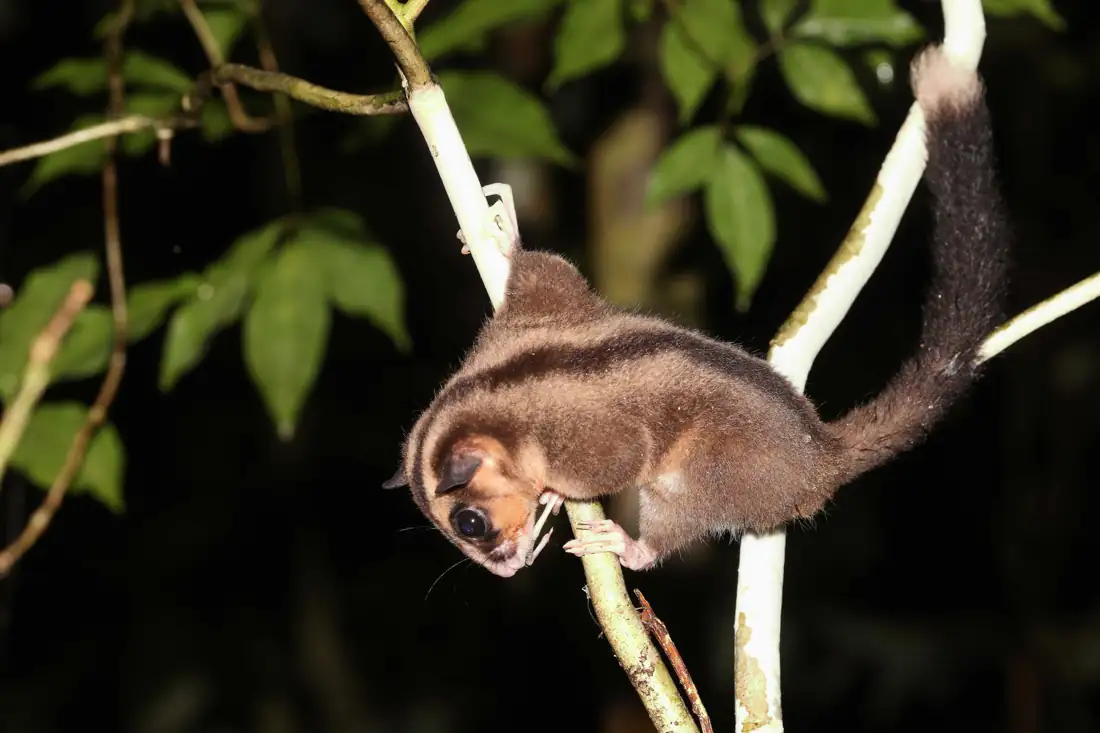
On this expedition, in June 2023, our team found and photographed a living Pygmy Long-fingered Possum (Dactylonax kambuayai). Until then the species was known to science only from fossils and was believed to have vanished about 6,000 years ago. Carlos Bocos’s photographs from that night were the first ever taken of a living animal.
A few weeks after the trip, the mammalogists Kris Helgen and Tim Flannery told Carlos what we had found. The rediscovery was announced in March 2026 and made headlines around the world. Carlos is a co-author of the scientific paper. The Australian Museum’s press release, however, said nothing about mammal watchers, our expedition or Carlos’s role, so most of the coverage missed how the animal was actually found. This is that story.
Trip summary
- Dates: June 2023 (17 days)
- Route: Manokwari – Gunung Mupi (Arfak Mountains) – Arfak birding trail – Sorong – echidna village – Malagufuk – Waigeo Island
- Leader: Carlos Bocos
- Team: Jon Hall, Charles Foley, Nils Bouillard, Venkat Sankar, Ian Thompson and bat scientist Juliana Senawi
- Local teams: Hans Mandacan (Manokwari and Gunung Mupi) and Absalom Kalami (Sorong area)
- Mammals: 59 species
Itinerary
- Day 1: arrival in Manokwari and a bat cave visit
- Days 2–6: Gunung Mupi, Arfak Mountains
- Days 7–8: Manokwari and a night walk on the Arfak birding trail
- Day 9: flight to Sorong and a night at a remote village to look for the echidna
- Days 10–14: Malagufuk eco-village
- Days 15–16: Waigeo Island, Raja Ampat
- Day 17: Sorong and departure

Highlights
Gunung Mupi: six Vogelkop Tree Kangaroos
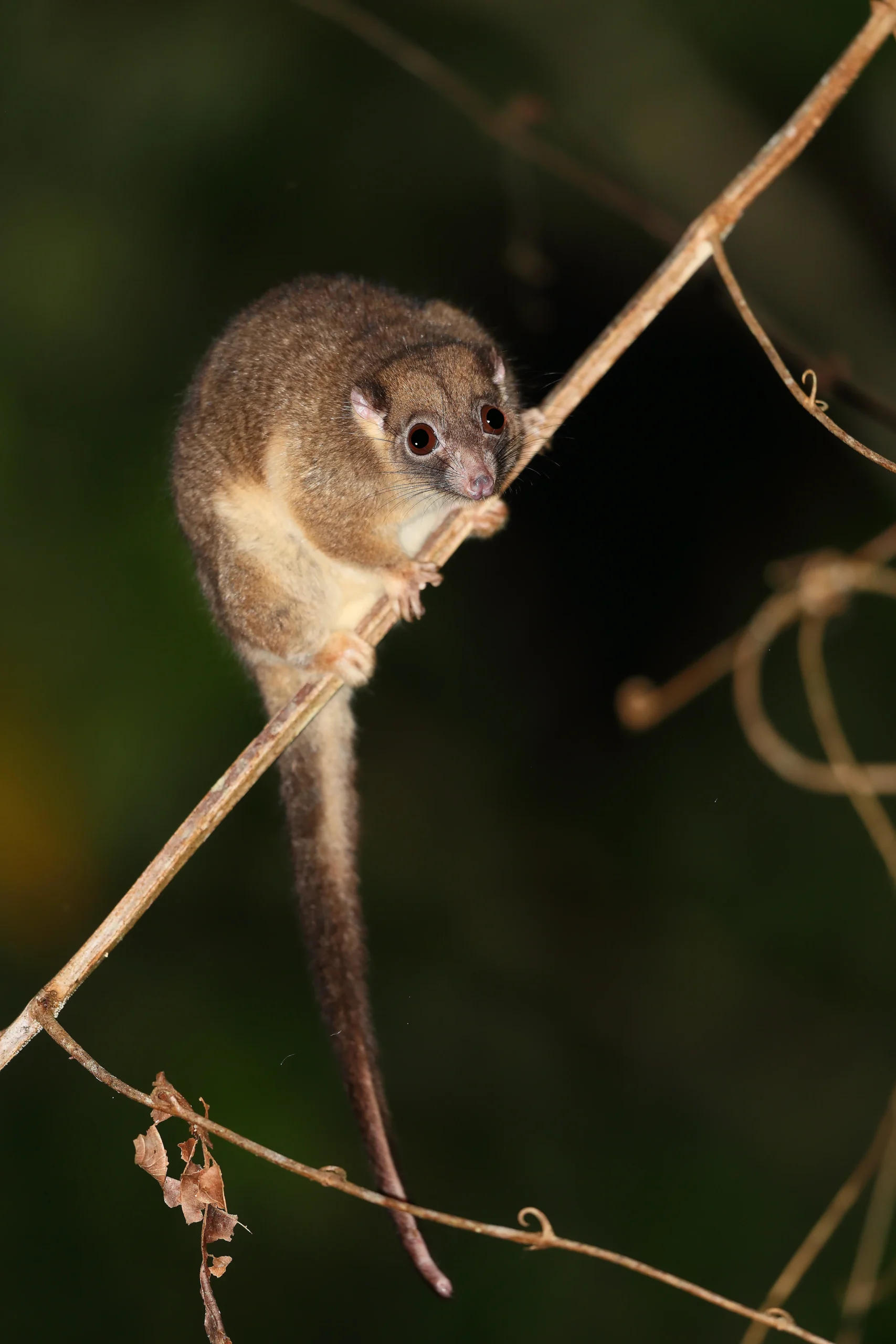
Gunung Mupi is community land in the Arfak Mountains, reached by a hard 8–9 hour hike from the trailhead near Manokwari. Its remoteness is the reason it is so good for mammals. Over five nights the team had three separate encounters with six Vogelkop Tree Kangaroos (Dendrolagus ursinus), including a mother with a tiny joey. They also saw three Grizzled Tree Kangaroos (D. inustus), which nobody had expected on Mupi. With the help of more than 30 people from the local community, night walks turned up a mammal roughly every ten minutes. Sightings included Ground Cuscus, Northern Common Cuscus, Arfak, Reclusive and D’Albertis’s Ringtails, Striped Possum, Papuan Glider, two Feather-tailed Possums and a long list of fruit bats and rodents.
The echidna village: Western Long-beaked Echidna and a lost possum
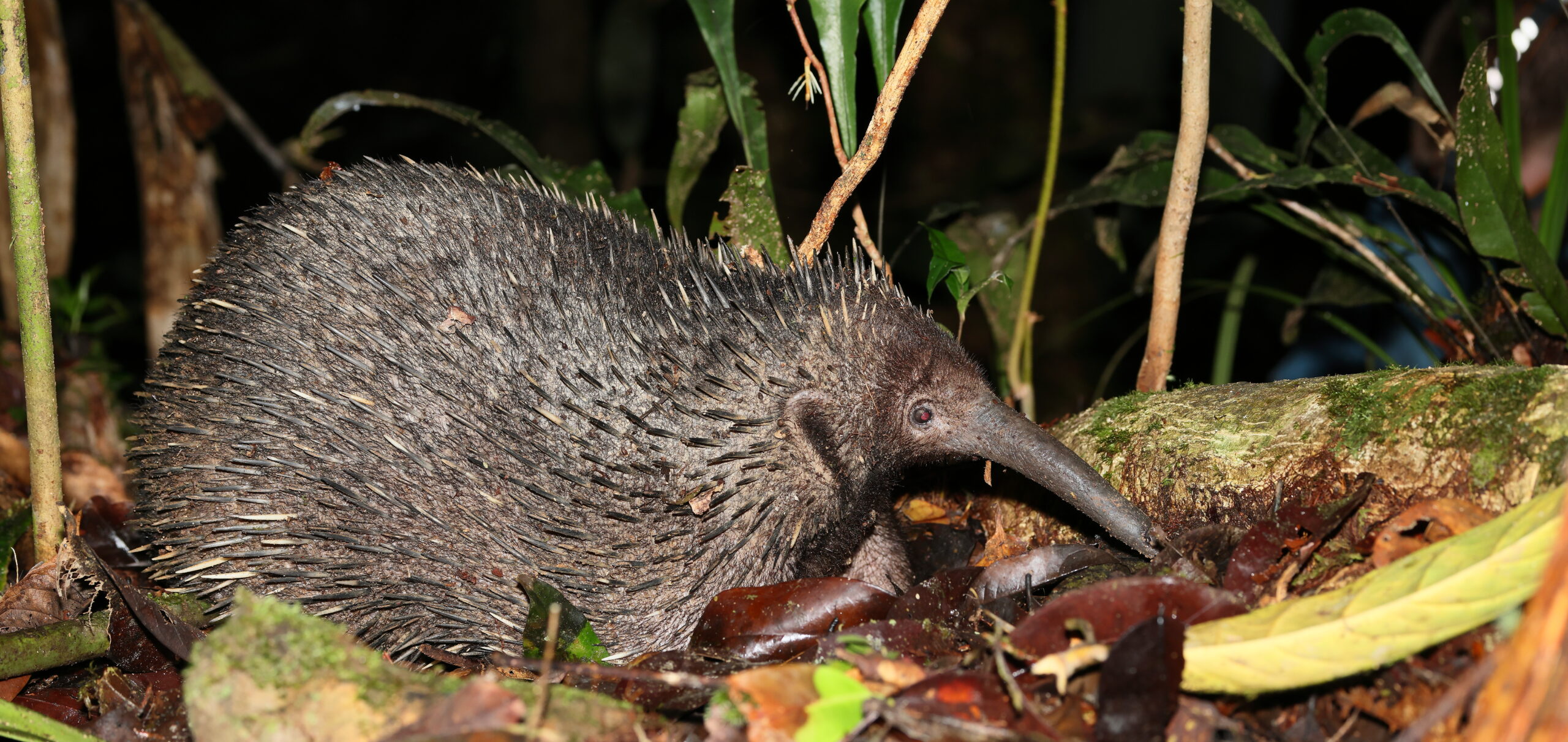
By 2023 echidnas were no longer being seen at Malagufuk. Absalom Kalami, one of Carlos’s local partners, spent months searching and found a small village where they still lived. The team were the first foreigners ever to visit, and the whole community turned out to welcome them. Just before midnight the villagers found a Western Long-beaked Echidna (Zaglossus bruijnii) on the bank of a creek. It stayed with the group for twenty minutes and was a lifer even for Carlos.
That same night produced the most important find of the whole trip: a living Pygmy Long-fingered Possum, a species thought extinct for 6,000 years. The full story is told below.
The same night also produced Black-tailed Dasyure, Bruijn’s Pogonomelomys and Maluku Myotis. The village later became the base for the Klalik community ecotourism project.
The true story of the Pygmy Long-fingered Possum
A night at Klalik, June 2023. We were the first foreigners ever to visit the village, and the whole community came out into the forest with us to look for the echidna. After about three hours, during a rest by a creek, one of the villagers came to Carlos with an animal he had just caught by hand. He called it “a squirrel”. It was a small striped possum with one extraordinarily long finger. Carlos photographed it that night. We knew at once that we had seen something very special. At first we took it for a Long-fingered Triok at an unusually low elevation, since the literature placed trioks above 1,000 m.
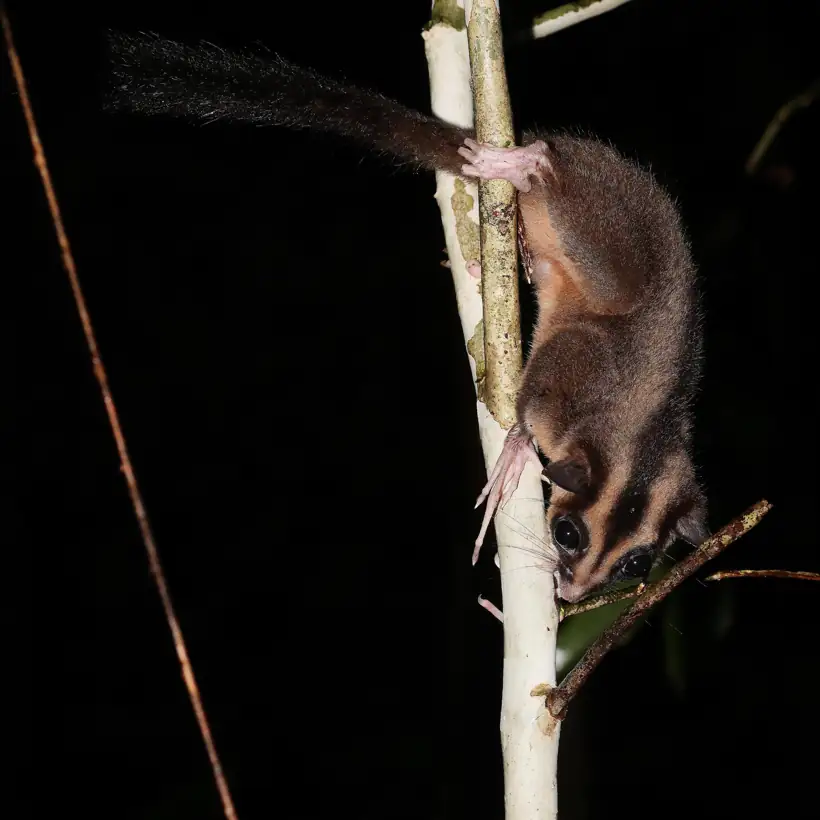
The identification. A few weeks later, the mammalogists Kris Helgen and Tim Flannery told Carlos what the animal really was: the Pygmy Long-fingered Possum, Dactylonax kambuayai. The species had been described from fossils and was believed to have been extinct for around 6,000 years. Carlos’s photographs were the first ever taken of a living animal. It is a true “Lazarus taxon”, a species that disappears from the fossil record and is later found alive. Its fourth finger is twice as long as the others and is used to pull insect larvae out of wood.
Nearly three years of silence. We kept the news to ourselves so the scientists could complete their research and publish first. Jon Hall did not announce it on mammalwatching.com, and none of us made it public.
March 2026: the announcement. On 5 March 2026 the rediscovery of two Vogelkop marsupials, the Pygmy Long-fingered Possum and the Ring-tailed Glider (Tous ayamaruensis), made news around the world, including in The Guardian and the BBC. The scientific paper, led by Tim Flannery and co-authored by Carlos Bocos, was published in the Records of the Australian Museum. It credits Carlos’s role and our 2023 expedition.
What the Australian Museum left out. The Australian Museum’s press release did not mention mammal watchers, our expedition or Carlos. Because most media coverage followed the press release, the world heard about the discovery without hearing how the animal was actually found: on a mammal watching trip, with the help of the people of Klalik. The day after the announcement, on 6 March 2026, Jon Hall set the record straight on mammalwatching.com in a post titled “New Pygmy Triok discovered after 6000 years (by us!)”.
The bigger story. That single night at Klalik did more than produce a famous photograph. Our trip report brought other mammal watchers to the village, and visits now give the community a reason to protect the Western Long-beaked Echidna and the forest around it. That forest is also where the Pygmy Long-fingered Possum lives. It is a clear example of what mammal watching can contribute to science and conservation.
Read more: Jon Hall’s post of 6 March 2026, the scientific paper (Flannery et al. 2026), The Guardian’s article and mammalwatching.com’s video about Klalik.
Malagufuk: jumping mice and bats
Five nights at the lowland eco-village of Malagufuk added Müller’s Three-striped Dasyure, Brown Dorcopsis, Lowland Ringtail and both Common and Long-nosed Echymipera. One of the highlights was a New Guinea Jumping Mouse (Lorentzimys), a poorly known genus not previously recorded anywhere near the Vogelkop. There was also an excellent bat list, with three tube-nosed bats, Great and Large-eared Flying Foxes, Diadem Leaf-nosed Bat and a Fly River Woolly Bat, a species even Carlos had never seen before.
Waigeo Island
The trip ended at a dive resort on Waigeo with Waigeo Spotted Cuscus around the lodge, five bat species in nearby caves including Trident Leaf-nosed Bat and White-tailed Giant Rat, and Bottlenose and Spinner Dolphins and Melon-headed Whales from the ferry.
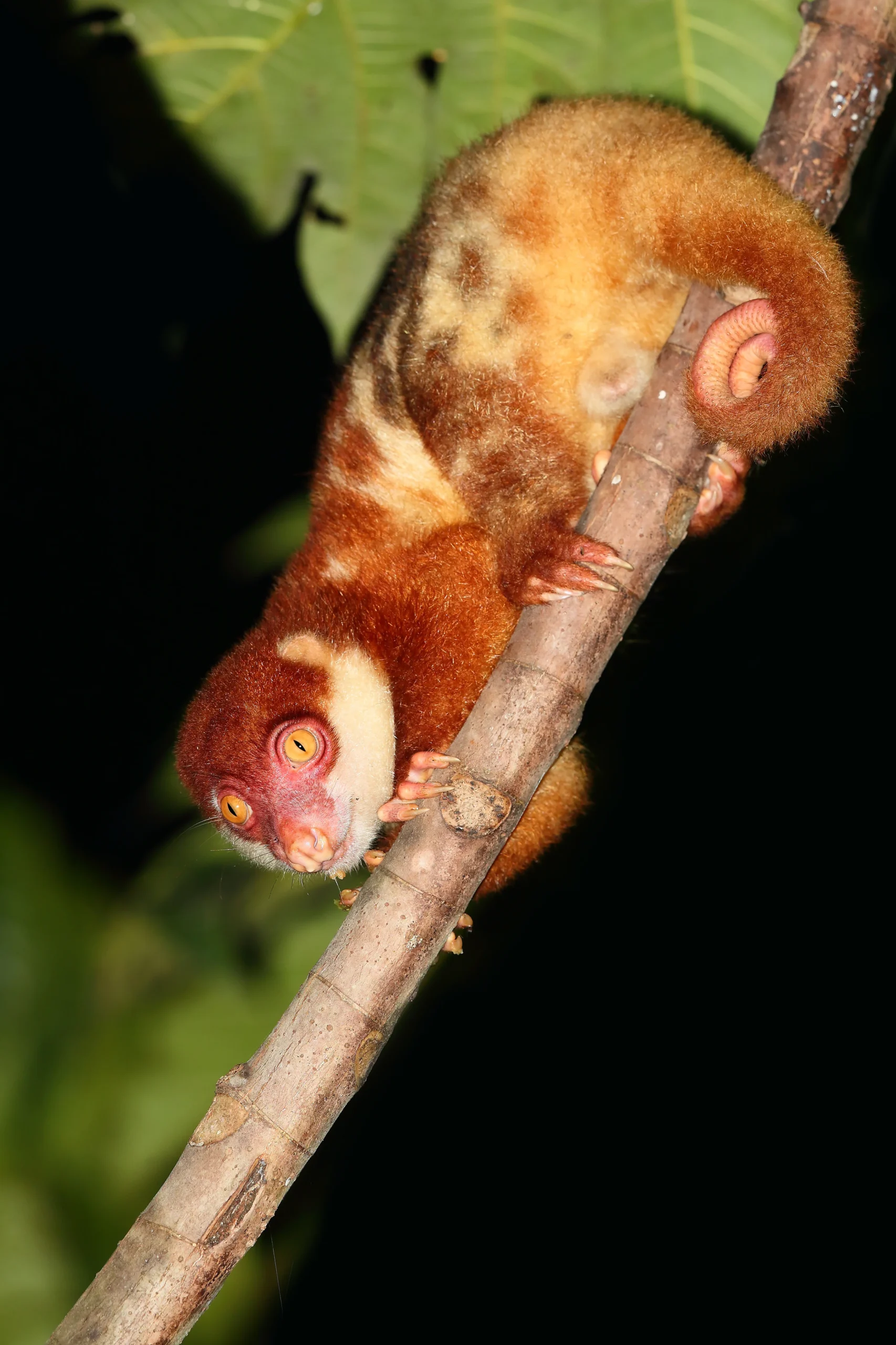
Selected species
Gunung Mupi and the Arfak Mountains
- Vogelkop Tree Kangaroo (Dendrolagus ursinus)
- Grizzled Tree Kangaroo (Dendrolagus inustus)
- Ground Cuscus (Phalanger gymnotis)
- Northern Common Cuscus (Phalanger orientalis)
- Arfak Ringtail (Pseudochirulus schlegelii)
- Reclusive Ringtail (Pseudochirops coronatus)
- D’Albertis’s Ringtail (Pseudochirops albertisii)
- Striped Possum (Dactylopsila trivirgata)
- Papuan Glider (Petaurus papuanus)
- Feather-tailed Possum (Distoechurus pennatus)
- Raffray’s Bandicoot (Peroryctes raffrayana)
- Common Echymipera (Echymipera kalubu)
- Chestnut and Grey-bellied Tree Mice (Pogonomys)
- Black-tailed Melomys (Melomys rufescens)
- Moluccan Naked-backed Fruit Bat, Geoffroy’s Rousette, Common Blossom Bat and Dagger-toothed Long-nosed Fruit Bat
- Unstriped and Round-eared Tube-nosed Bats
- Lesser Sheath-tailed Bat and Small Melanesian Bent-winged Bat
Echidna village and Malagufuk
- Western Long-beaked Echidna (Zaglossus bruijnii)
- Pygmy Long-fingered Possum (Dactylonax kambuayai)
- Black-tailed Dasyure (Murexia melanurus)
- Müller’s Three-striped Dasyure (Myoictis melas)
- Brown Dorcopsis (Dorcopsis muelleri)
- Lowland Ringtail (Pseudochirulus canescens)
- Long-nosed Echymipera (Echymipera rufescens)
- New Guinea Jumping Mouse (Lorentzimys cf. nouhuysii)
- Bruijn’s Pogonomelomys, Loria’s Pogonomys and Common Lowland Paramelomys
- White-tailed Giant Rat (Uromys caudimaculatus) and Common Water Rat (Hydromys chrysogaster)
- Greater, Common and Unstriped Tube-nosed Bats
- Great Flying Fox and Large-eared Flying Fox
- Diadem and Biak Leaf-nosed Bats
- Fly River Woolly Bat (Kerivoula muscina)
- Maluku Myotis (Myotis moluccarum)
Manokwari and Waigeo
- Lesser Bare-backed Fruit Bat (Dobsonia minor)
- Raffray’s Sheath-tailed Bat (Emballonura raffrayana)
- Waigeo Spotted Cuscus (Spilocuscus papuensis)
- Trident Leaf-nosed Bat (Aselliscus tricuspidatus)
- Spinner and Bottlenose Dolphins, Melon-headed Whale
Read and listen
Jon Hall’s full report, with photographs and the complete list of 59 species, is on mammalwatching.com: West Papua, 2023. Carlos, Jon and Charles Foley also talk about the expedition on the mammalwatching podcast (S2 E17: Expedition to West Papua).
A year later we went back with a small group: see the West Papua 2024 trip report and our West Papua tour page, or contact us about future departures.
